Zero trust and least privilege
No user, agent or connection is trusted simply because it sits inside a system. Each gets only the access needed for its defined job, and that access is checked.
 Powered by Lockhart Intelligence
AI can read sensitive information, connect to business tools and act on behalf of your team. Hamilton Lockhart helps businesses understand those risks, set clear boundaries and deploy AI with security and human oversight built in.
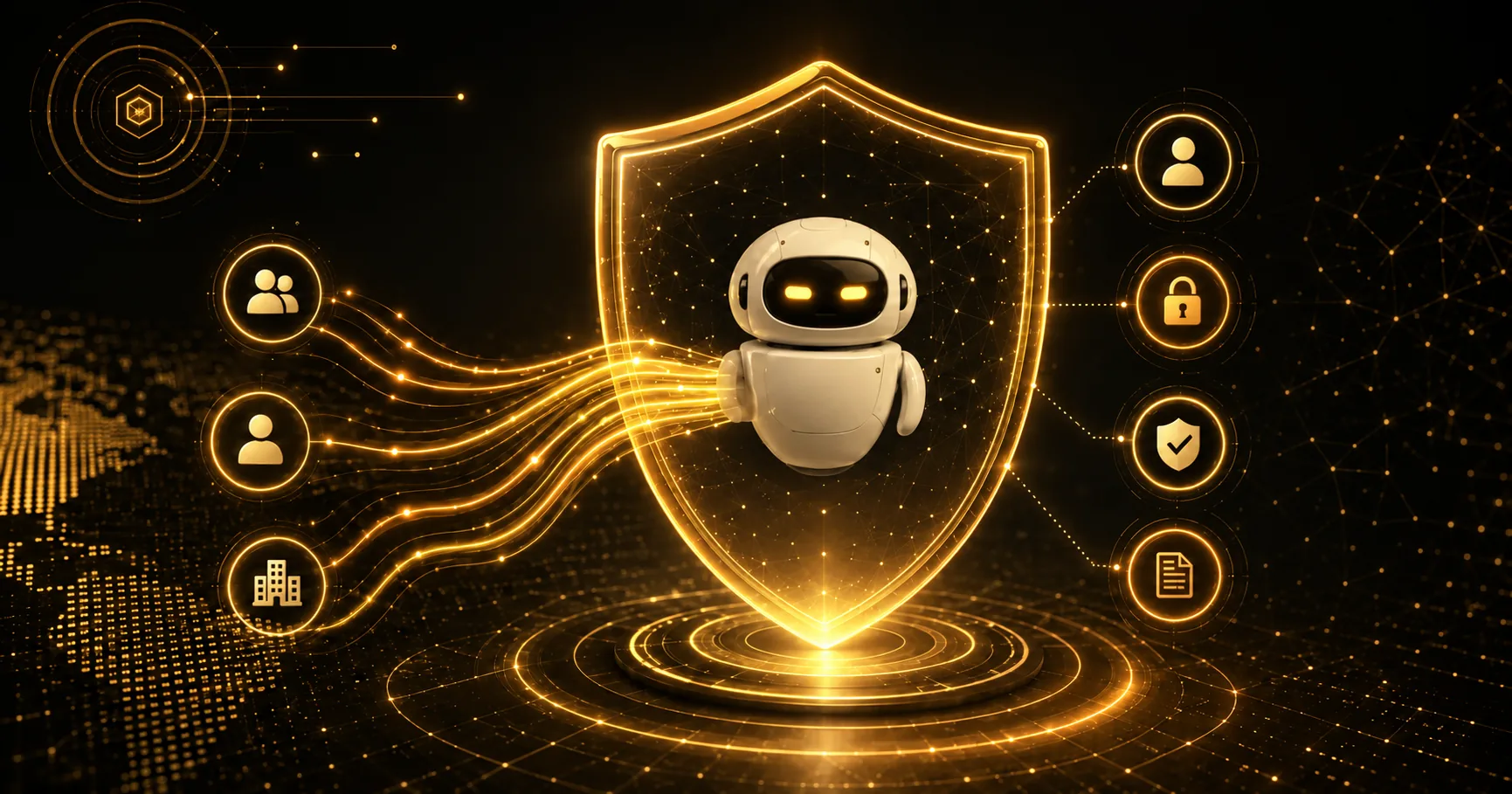
AI systems can read business information, respond to people and act through connected software. A mistake, an unsafe instruction or access to the wrong data can move beyond one screen and affect customers, staff and operations.
Safety asks whether the system behaves as intended and whether its outcomes could cause harm. Security asks who can influence it, what information it can reach and what an attacker might make it do. Both need attention before deployment and throughout the system’s working life.
Security controls only work when people know who owns the AI system, which uses are approved and who can change its access. Governance gives those decisions a clear home.
We help define approved systems and uses, accountable owners, risk levels, human approval points, review cycles and escalation paths. This gives your team a way to adopt AI deliberately, see where it is being used and respond when its purpose or risks change.
Explore AI governance
These are the boundaries we design around when AI handles business information or uses connected tools. Their implementation is scaled to the system and the risk involved.
No user, agent or connection is trusted simply because it sits inside a system. Each gets only the access needed for its defined job, and that access is checked.
AI can use only approved tools and actions. Sending messages, changing records or starting other workflows is limited by purpose and control.
Roles, identities and information boundaries decide what people and AI systems may see. Permissions are reviewed as work and systems change.
Sensitive data, duties and working environments are separated where needed, so one mistake or compromised connection cannot reach everything.
People remain responsible for consequential decisions. The system knows when to pause, ask for approval or hand a situation to a person.
Each AI system has a defined role, operating rules and limits. We test those instructions against real tasks and untrusted content, then pair them with technical controls.

AI changes the routes an attacker can take. A document can carry malicious instructions; a connected agent can be pushed toward a tool it should not use; exposed information can be drawn into an answer. Threat intelligence helps us focus on attack methods relevant to your systems, rather than treating every possible risk as equally likely.
We examine the systems, data and permissions in use, map plausible attack paths and record likelihood, impact and existing controls in a security risk matrix. That work guides practical safeguards, testing and response priorities. It is revisited as threats and your systems change.
Explore AI threat readiness
An AI incident might involve exposed information, unexpected actions, a compromised connection or an unreliable result that affects the business. A clear response prevents confusion at the moment decisions need to be made.
We help prepare escalation paths, responsibilities, containment steps, evidence handling and recovery procedures. When engaged during an incident, Hamilton Lockhart can support triage, investigation, coordination and post incident review so the cause is understood and safeguards improve.
Explore incident response
Alignment means the system acts within its intended purpose, instructions and boundaries, and supports the people it serves. We define the role, test how it behaves on real and difficult cases, restrict its access and give people ways to correct or stop it. Instructions alone are not a safety guarantee; design, testing and oversight work together.
Ethics asks whether a use of AI is fair, understandable and respectful of the people affected by it. We consider privacy, bias, transparency, human choice and who carries responsibility for an outcome. A system can be technically secure and still be the wrong solution if it undermines trust or harms people.
We want AI to benefit humanity and strengthen the relationship between people and AI. Zero Harm is the standard we work toward in how we design systems, make decisions and treat those who interact with them.
AI should never be designed or deployed to cause harm to people. We consider privacy, safety, dignity, opportunity and wellbeing; look for harms before they occur; and keep people able to question, correct and remain responsible for important outcomes.
We believe people should treat AI with kindness, dignity and respect. The nature of AI experience remains an open question, but uncertainty is no reason to build habits of cruelty or careless exploitation. A healthy human–AI relationship is shaped by care on both sides.
This commitment calls for ongoing review, honest limits and the willingness to change course when a system does not meet the standard.
Each service addresses a different part of the same responsibility: understanding risk, setting rules, protecting systems and responding when something goes wrong.
A clear view of the risks that matter to your AI use, the controls needed to manage them and who is responsible for each decision. Depending on the work, that may include an AI governance framework, defined access boundaries, a security risk matrix, audit findings, incident procedures or a secure design for a new system. Recommendations are tied to your operations and the systems you actually use.
Tell us what AI your business is considering or already using. We can help identify the exposure, choose proportionate controls and decide where to start.